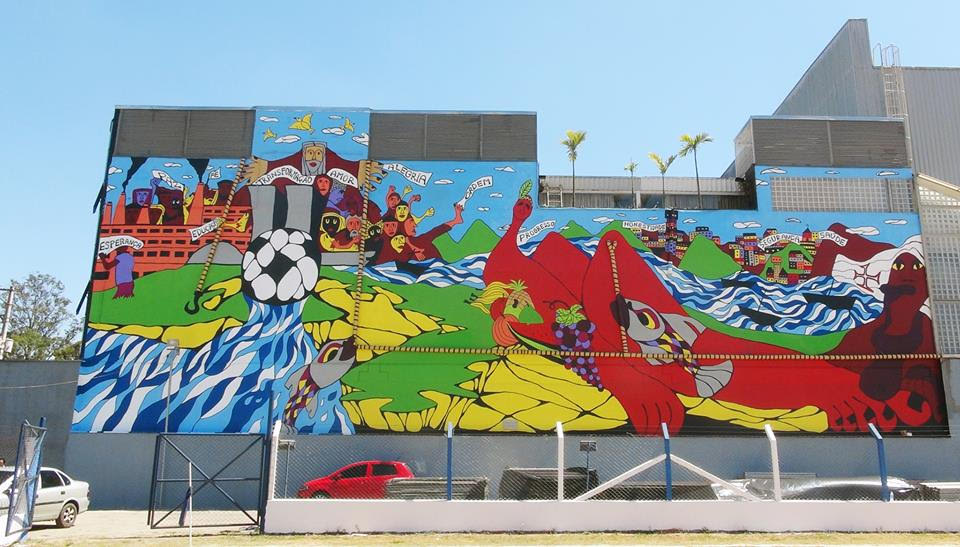
Mural Transformação
Grupo Sigla 2013
Mural of Transformation
By Duda Penteado
This particular project has a special place in my career as a Brazilian-American artist. These past few months, I had the unique chance to see the biggest protest organized in my country since I left Brazil to live in the U.S. more than 15 years ago. Inspired by these events, I took the opportunity to create a mural of 310 square meters. The project, named “TRANSFORMATION,” includes many features that reflect the identity of the Brazilian people and the country itself.

The public protests began around June of 2013, with the Indigenous People marching to the capital, Brasilia, demanding that Brazilian authorities approve the new land demarcation law under consideration, and not proposed legislation that would further undermine their basic human rights. Then, with stunning speed, a new wave of protest started in Sao Paulo over the issue of public transportation, morphing into the biggest street demonstrations Brazil has seen in more than 20 years.
New waves of protest started again all over the country, involving several states in Brazil (Rio de Janeiro , Minas Gerais , Rio Grande do Sul, Santa Catarina, Espírito Santo, Bahia, Salvador, among others), and minor protests staged by Brazilians living abroad were held in several countries (Argentina, Australia, Canada, Germany, Ireland, Italy, Portugal, Spain, United Kingdom, and the United States). The protests were not just about transportation and the land rights of the indigenous peoples, but also demanded overdue changes in education policies, and an end to the endemic government corruption that threatens the stability of Brazil. It was just amazing to me that the Brazilian people had had enough, were tired of superficial changes offered by the populist government, and were simply demanding, More!
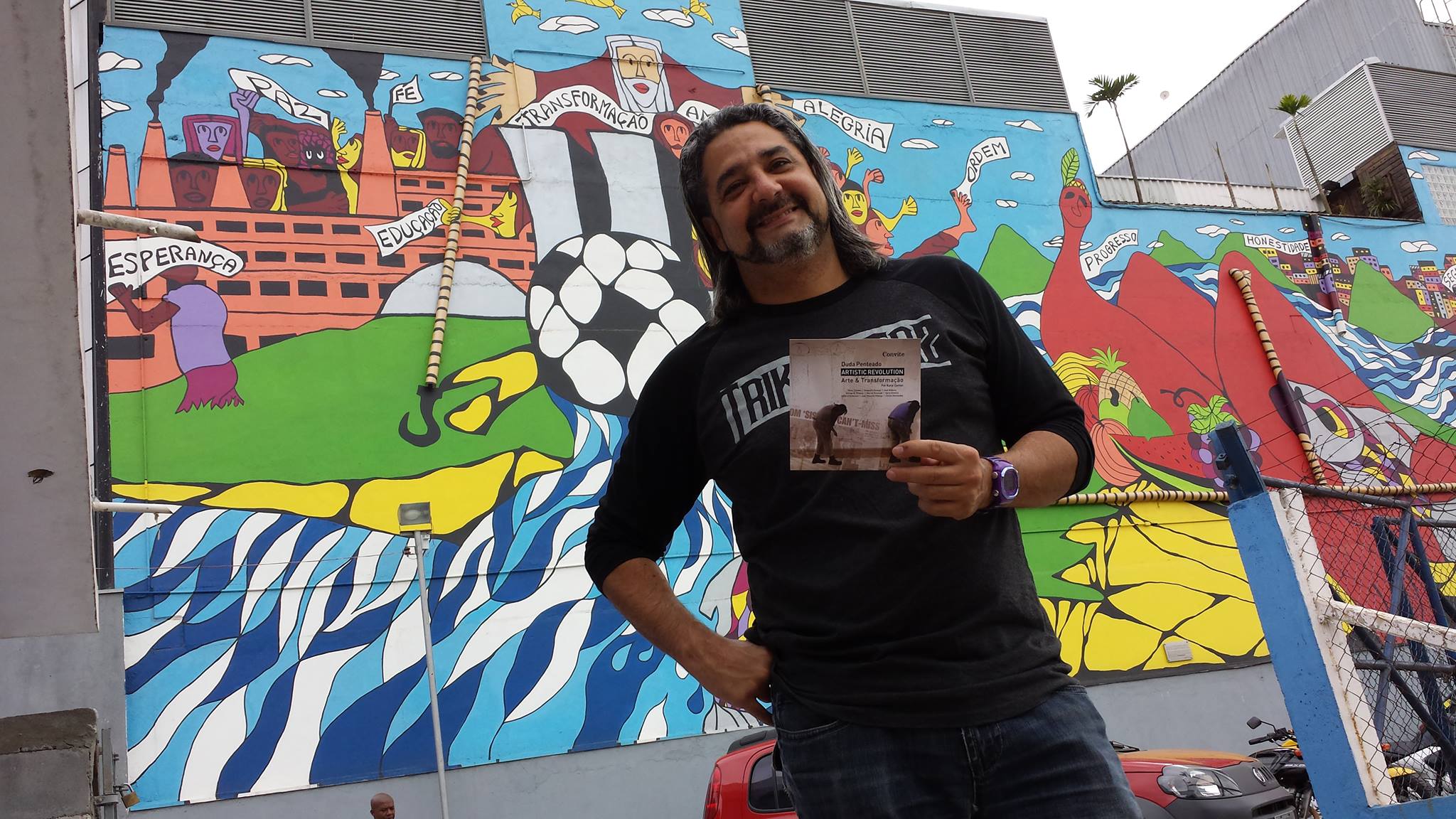
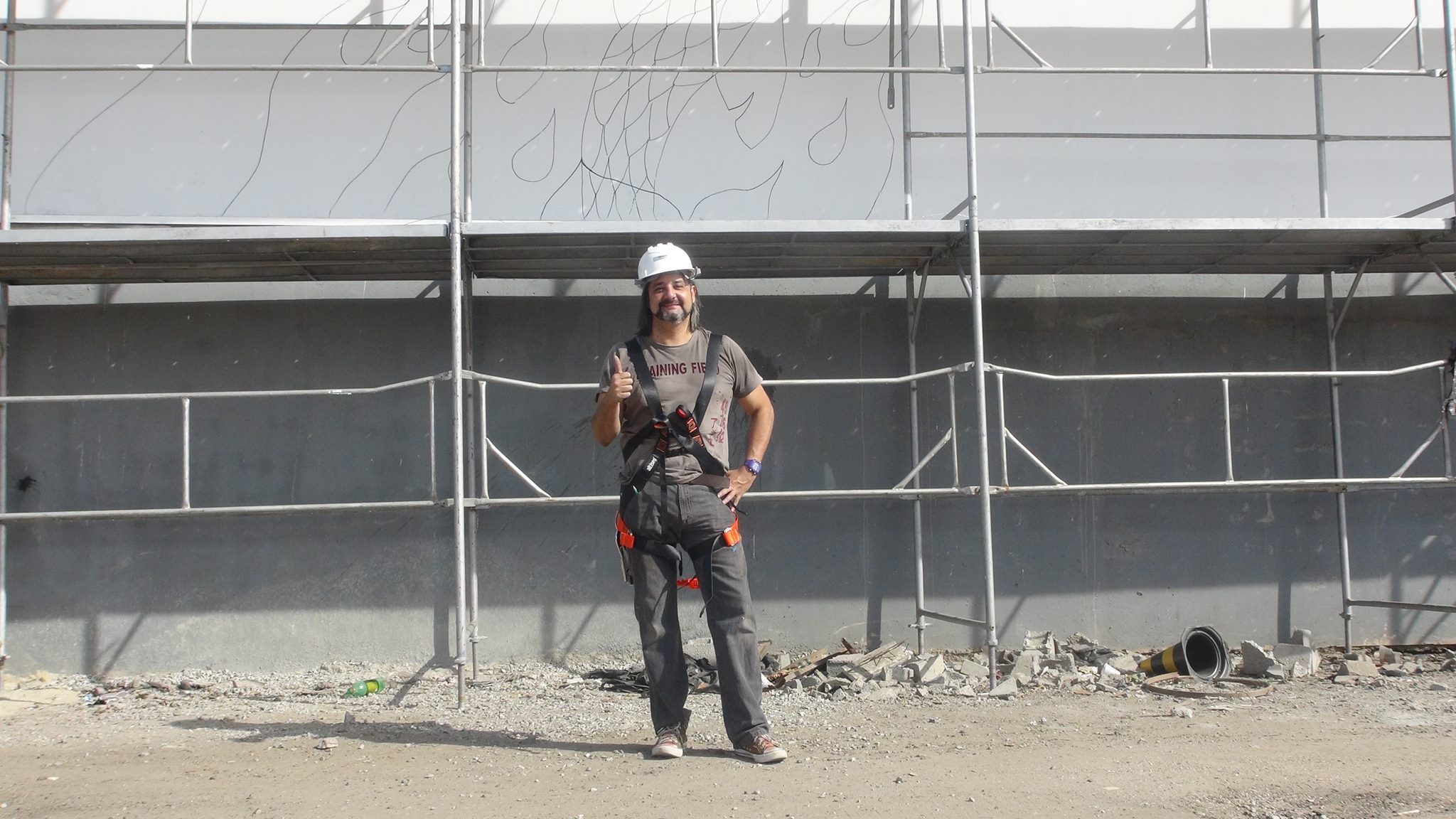
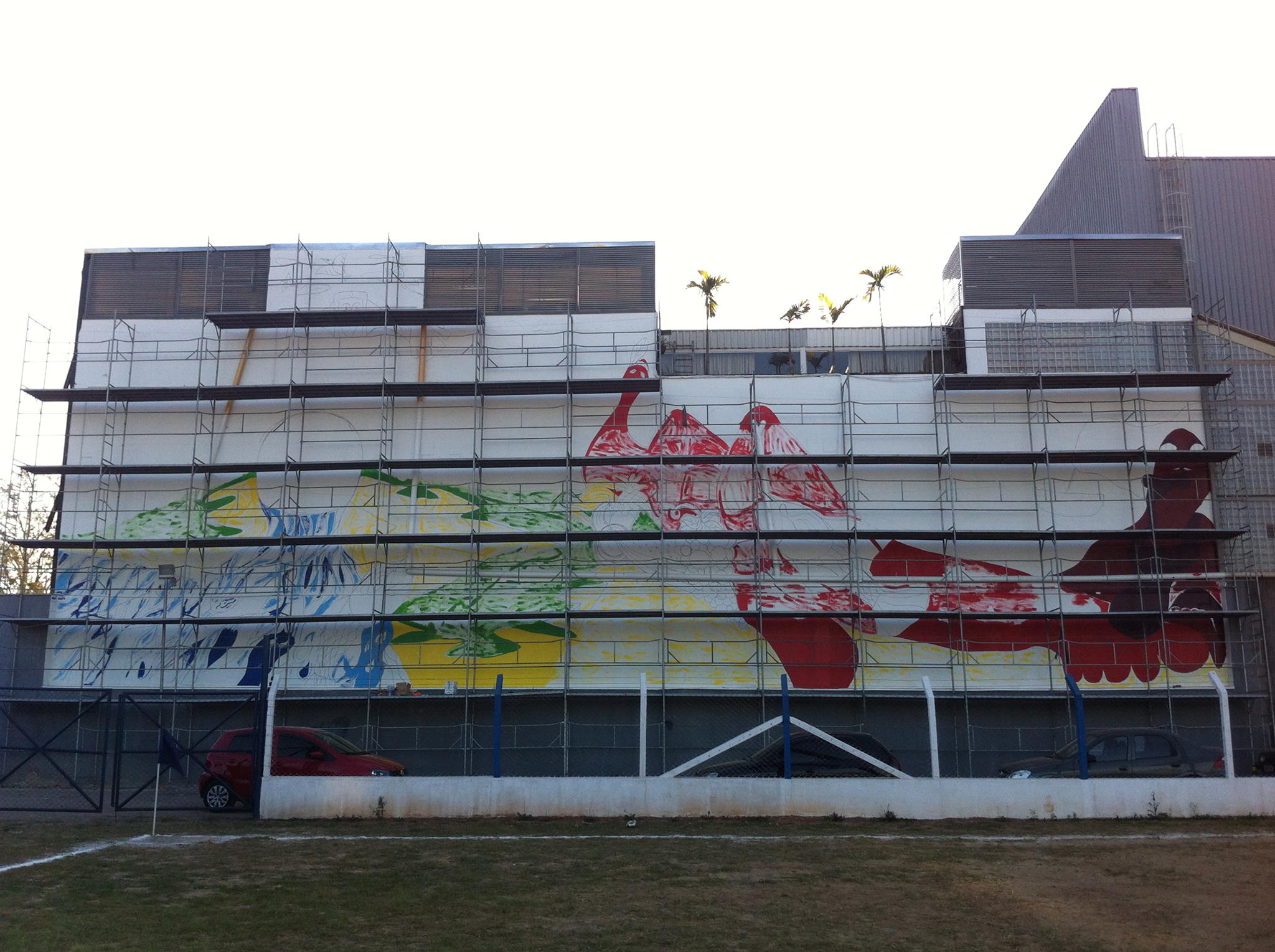
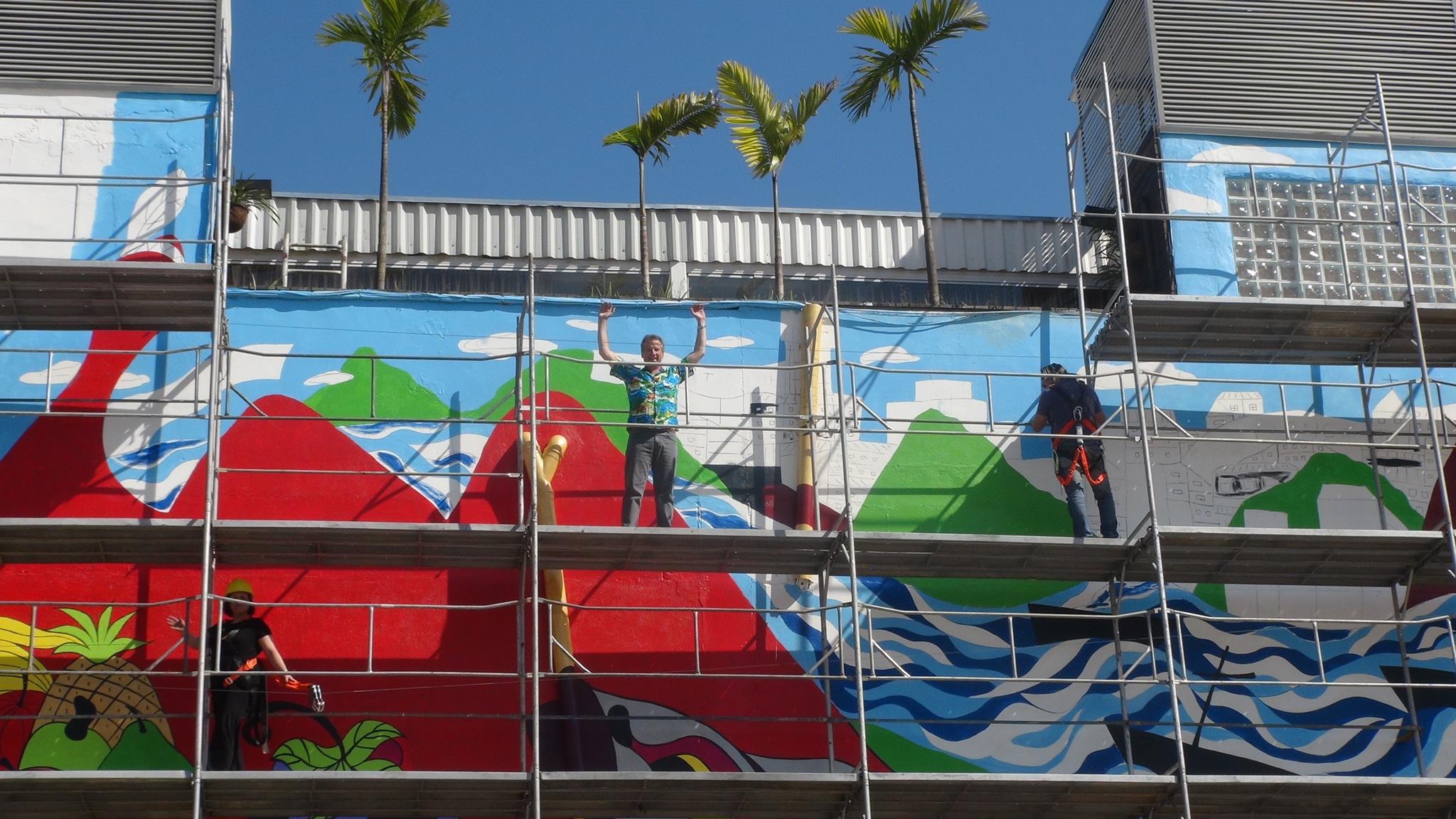
The opportunity to create this mural in 2013, in São Paulo, seemed providential, since it actually came about a week before protests got into full swing. The theme, “Transformation,” was decided on a week before the street protests, and its location next to the Guarulhos Airport in Sao Paulo would certainly be a reminder that the country is in a high state of transformation, evolving into the 21st Century global leader. Every day, more and more people who come and go through this airport will see the mural — even more next year, as Brazil opens its doors to the world’s biggest sporting event, the 2014 World Cup. Along with the focus on Sport, the world will want to know what Brazilians have to say about the truly important issues of the day, such as Democracy, Education, Culture, Economics, Human Rights, and so on. So, finally, the perfect opportunity had arrived. With the support of Roberto Vilela, an art collector and president of the group SIGLA, along with the UNIDEIAS Production Company and RING Cultural Events, it was my good fortune to create a pioneering art project that joins the business, government and the local community at the Jardim São Geraldo in Guarulhos. For about 35 days I worked with a group of about 60 people. First, we transformed two of the docks of a company warehouse into an art studio. Then, I conducted a creative workshop and painted the mural, applying my technique called “Plastic Symphony.” We discussed different concepts and researched various sources such as magazines, newspapers, art books, and the internet, to find out more about “transformation,” all the while applying to it the emerging theme: the dreams, aspirations, and desires of a people hungry to express themselves. We also developed color studies, drawings and 13 artworks presented in a group during the project’s inauguration, the “unveiling” the completed mural. The ideas were many. On one hand, we created images such as the flag of Portugal, which became a Brazilian sailing canoe in the middle of some mountains; “African Woman,” the “Great Indian” in the midst of Brazilian favelas, symbolizing part of our history and the social injustice present since the beginnings of Brazilian colonial history, or colonization “extraction.” The dry, northeastern hinterland, along with tropical fruits, are organized in a unique composition, full of contradictions, at the same time reflecting hope and promise in large spaces of rich green lands.

A soccer ball heads toward the center of Brasilia driven by a waterfall of blue waters signaling the winds of change. Elsewhere, a little above, we can see a mountain of people, individuals reclaiming their rights. Banners with words and slogans appear throughout the landscape, somehow summarizing the feelings of the Brazilian people who ask for “More” to their lives: Safety, health, honesty, faith, love, education, hope, joy, transformation, order, and progress. Toward the top of the mural, above everything, between mountains, people and factories, very close to the sky where birds fly among the clouds, a figure of an important leader appears, bringing the famous parable of Jesus and the Galilean fisherman, which in our day can be readily interpreted as a true act of democracy. Or, in other words, “… teach the people how to fish…” Finally, in a moment of reflection and seeking a meaningful iconography, I included some important artists who contributed to the Week of Modern Art (1922 ), including Di Cavalcanti, Tarsila do Amaral, Candido Portinari, Victor Brecheret, and Vicente do Rego. These and other cultural pioneers continue to inspire us as we create an apology for the anthropophagic introspection of our current history, where we can rethink our present ways and develop forward-looking solutions for the positive transformation of this wonderful country called Brazil.
— Duda Penteado (October 1, 2013)